Wednesday, February 8, 2012

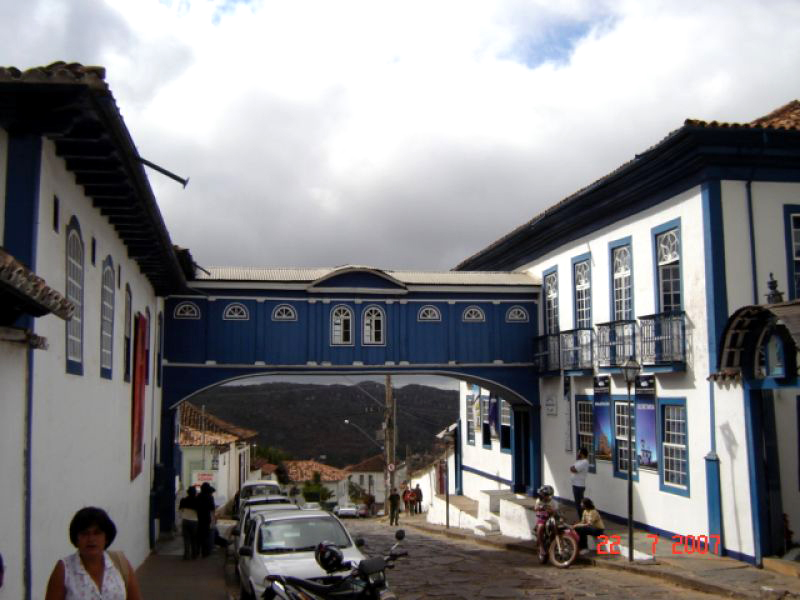
Diamantina - Brazil's Other Baroque Gem

Diamantina at twilight
The baroque goldrush town of Ouro Preto, located in the mountains of Minas Gerais state, is one of the most well-known and visited Brazilian cities of tourism. Ouro Preto is an almost obligatory stop for any tourist visiting Belo Horizonte, the capital of the state and one of Brazil's largest metropolitan areas. Ouro Preto is only about an hour or two from BH (as Belo Horizonte is familiarly nicknamed) and so it's easy to make a day trip from the capital or enjoy a quick overnight visit. Ouro Preto's worth as part of the world's cultural patrimony has been recognized by UNESCO which honored it with World Heritage Site status in 1980.

Less well known, but equally worthy of its World Heritage Site status (granted in 1999) is another small town which owes its origins to the 18th century goldrush in Minas Gerais, Diamantina. Less accessible than Ouro Preto at 300 km. from Belo Horizonte, Diamantina doesn't receive the hordes of tourists that can sometimes lessen the pleasure of a visit to Ouro Preto. For some connaisseurs of baroque city planning and architecture Diamantina is more beautiful than Ouro Preto, but the friendly controversy over which city is lovelier will probably never be settled. Its mineral wealth was not limited to gold - the area around Diamantina was mined as well for diamonds (hence the city's name). The gems and metals of the mountains surrounding Diamantina meant that it was extraordinarily wealthy during its 18th century heyday. The artistic riches that remain are proof of that wealth, and testify to the labor of the millions of slaves who were forcibly brought from Africa to work in the mines of Minas Gerais.

Diamantina is also famous among Brazilians for being the hometown of one of Brazil's most-loved presidents, Juscelino Kubitschek, born in Diamantina in 1902 and the man whose vision was responsible for the creation and construction of Brasília, Brazil's new capital city.

Diamantina is a center for religious observances and pilgrimages in Minas Gerais. Some of the annual religious celebrations bring thousands of devotees to the city, as does the city's very traditional but very popular Carnaval. Tourism, whether during a festival season or not, plays a large role in Diamantina's economy, and the city is full of small inns and pousadas, traditional restaurants and bars and food shops selling traditional local snacks, preserves, pastries and sweets.

In our next post, we'll tell you all about Zenília Rosália da Silva Rocha, a local cook, and explain just why she's so famous in Diamantina.

Tuesday, February 7, 2012

Minas Gerais - Gastronomic Routes

Even though Italian cooking includes such well-known regional styles of cooking as Neapolitan, Sicilian, Venetian, even Sardinian, most gastronomic historians consider the region of Emilia-Romagna to be the true heartland of traditional Italian gastronomy. Containing such gastronomic hot spots as Parma (with its ham and its cheese), Modena (home of balsamic vinegar) and Italy's food capital, Bologna, Emilia-Romagna is at the same time the cradle of traditional cooking and the location of some of the most daring and avant-garde 21st century Italian gastronomy.

In Brazil, which resembles Italy in the number and variation of its regional cuisines, the interior state of Minas Gerais, located in the south-eastern part of Brazil, holds an analogous position in Brazilian gastronomy to that of Emilia-Romagna in Italian. Not as unique as Bahian cooking with its bold mixture of African and European styles and techniques, nor as strictly-European as the cuisines of the south of Brazil, mineiro (meaning from Minas Gerais) gastronomy is to many people the true essence of Brazilian cooking.

The influences that went into the creation of mineiro cooking are those which define all Brazilian cuisine - European, particularly Portuguese, African and native Indian. In the lush highlands of mountainous Minas Gerais these influences were blended, mashed and mixed into something uniquely new and Brazilian - Minas Gerais was the crucible in which Brazilian cooking was forged.

Even today, Minas Gerais is one of the places in Brazil where food and cooking matters most. From the modern capital Belo Horizonte, through exquisitely beautiful baroque cities like Ouro Preto, Tiradentes and Diamantina, and on to the small villages and farms that dot the landscape, people care about what they eat and they honor the foods that have been a part of their diet for years, even centuries. Local cheeses, long-cooked stews, sweets and desserts whose recipes date back to the convents of medieval Portugal - they all play a part in mineiro gastronomy.

Because so much of what makes mineiro cooking such a marvel comes from small towns and villages throughout the state, we at Flavors of Brazil were thrilled to recently come across a website called Sabores de Minas (Flavors of Minas Gerais) and its 69 different gastronomic routes through the state. Each route concentrates on a particular region or a particular speciality of this enormous state (slightly larger than France). For example, route number 32 concentrates of the baroque cities of the 17th Century mineiro gold rush, number 22 is focused on the relatively-unpopulated north of the state, and number 44 on coffee and sweets. For each route, the website publishes a map and a list of 15-18 suggested stops. A stop might be a farm that produces cheese, it might be a long-established local restaurant, or it might even be the home of a cook whose fame has spread beyond her family to include her whole village. Each stop is described in detail, with personal stories of the cooks and producers involved and each includes a recipe.

The site is a treasure-trove for anyone interested in traditional Brazilian gastronomy, and a powerful inducement to book a flight to Belo Horizonte, grab a rental car and head for the hills in search of the soul of mineiro cooking. And the 700+ recipes are enough to keep any amateur cook happy for months in the kitchen at home.

For most non-Brazilians there is one significant problem with the website - it's in Portuguese only. Although Google will offer to translate the page in most browsers, its translator is not yet sufficiently sophisticated to correctly translate this site. Because of that language difficulty, and because of the importance of mineiro cooking to Brazilian gastronomy, tomorrow  Flavors of Brazil will publish the first of s series of occasional reviews/translations of some of the best of Sabores de Minas. We hope it will open some eyes to the beauty of the state and the quality of its food products and cooking.

Monday, February 6, 2012

RECIPE - Panelada

Should you decide that you want to make the traditional Brazilian stew called panelada, you're likely to run into two obstacles en route to a culinary home run at the dinner table. First, if you live in North America or metropolitan areas of Europe you're likely to have problems finding sources for some of the ingredients that the dish demands. Things like cow stomach (including but not limited to tripe) and cow intestines. The other problem (at least if you consider honesty a virtue) is convincing family members, dinner guests or amyone else to whom you serve the dish to try panelada with an open mind. (If you don't consider honesty a virtue and try to lie your way into general acceptance of panelada the shape and form of the stomach and intestines will probably give your game away.)

But there are always those culinary pioneers who boldly go where no cook has gone before, and for them we offer this recipe for panelada from the northeastern Brazilian state of Ceará, where panelada is considered an iconic dish.
___________________________________________________
RECIPE - Panelada
Serves 4

1/2 lb (250 gr) cow stomach (tripe may be substituted)
1/2 lb (250 gr ) cow intestine
juice of 3 limes
1/2 Tbsp salt
2 large tomatoes, seeded and chopped
2 medium onions, chopped
1/2 Tbsp annatto powder (sweet paprika may be substituted)
2 bay leaves
1 red or green bell pepper, seeded and chopped
1 cup chopped cilantro
fresh-ground black pepper to taste
6 cloves garlic, minced
1 jalapeno or serrano chili
----------------------------------------------------------------------------
Using kitchen scissors, cut the stomach (or tripe) into small squares and the intestine into 1/2 in (1 cm) rings. Wash them very well in several changes of water. Put them in a heavy saucepan, cover with cold water, add the lime juice and bring to a boil over medium high heat. Let boil for one minute, then drain them in a sieve. When cool, wash again in several changes of fresh water.

In a large pan, combine the washed stomach or tripe and intestine, the salt, the chopped tomato and onions, the annatto or paprika and the bay leaves. Heat over medium heat, partially covered. Stir from time to time to mix ingredients and to help the tomato to break down. When liquid comes to a boil, reduce heat and simmer for approximately 40 minutes, adding a small amount of water from time to time if the dish appears to be drying out.

Stir in the bell peppers, the garlic and chilis. Cover the pan and cook over low heat until the meats can be easily pierced with a fork and are tender.

Remove from heat, pour into a deep serving bowl and mix in the chopped cilantro. Serve immediately accompanied by white rice.

Sunday, February 5, 2012

Panelada - A Polarizing Dish

Some foods, and some prepared dishes, evoke strongly opposing reactions among those who try or sample them. Call them the "love 'em or hate 'em" items of the food world. In a recent article in Huffington Post, ten foods were listed as being among the most polarizing - no one seems to be neutral about them. The ten were, in no special order, cilantro, blue cheese, Vegamite/Marmite, celery, coconut, liver, mayonnaise, marzipan, green pepper and licorice.

Just like those foods, there are some prepared dishes that get some folks' mouths watering and others trying to stifle a gag reaction. Scottish haggis, Norwegian lutefisk, Dutch raw herring, Chinese Dim Sum chicken feet, even sushi. Those who love these dishes don't just love them, they adore them. And those who don't - well, they can't abide them.

In Brazil, even though it contains such potential troublesome pig parts such as salted ears, salted tail and salted belly fat, almost everybody loves the dish often considered Brazil's national dish - feijoada. Or at least no one will admit they don't like it. But another widely loved traditional stew, called panelada, evokes a strong pro or con reaction even among Brazilians. For some Brazilians, panelada is the ultimate comfort food - something to eat on a cold rainy day, or the best cure for a wicked hangover. For others, even the smell of panelada cooking is enough to send them flying out of the kitchen with their hand over their mouths.

Panelada is just one of the many Brazilian variants of a stew - meat and vegetables cooked in a thick broth, all served together. Writer Roberto Da Matta, in his book "O Que Faz o Brasil, Brasil?" (What makes Brazil Brazil?), talks about the general Brazilian preference for stew-type dishes, from feijoada to peixada, to dobradinha, and of course, to panelada, "It appears we (Brazilians) have a prediliction for food that is neither liquid nor solid but halfway between the two."

panelada
So it's not the fact that it's a stew that makes panelada a "problematic" dish. It's what that stew contains. A proper panelada contains a wide variety of those parts of an animal collectively known as offal. One recipe, for example, calls for 2 lbs (1 kg) each of tripe, intestines, nerves and feet. another calls for hoof instead of foot. Most recipes will call for, at minimum, tripe, intestines and foot. It's these ingredients that make panelada, to coin a phrase, one man's meat and another man's poison.

Although panelada is made, and loved or hated, all around Brazil, it is particularly associated in most Brazilians' minds with the northeastern region of the country. Tomorrow we'll publish a recipe for a northeastern panelada, one from the state of Ceará.

Friday, February 3, 2012

RECIPE - Coconut Blancmange for Yemanjá (Manjar Branco para Yemanjá)

Yemanjá painted by Carybé
In yesterday's post here on Flavors of Brazil, we promised to post a recipe today for one of the ceremonial dishes associated with the goddess Yemanjá in the Afro-Brazilian religious tradition of Candomblé. Each of the many gods and goddesses of Candomblé has specific foods with which they are associated - foods that they are said to enjoy - and these foods are offered to the deity during Candomblé ceremonies (and subsequently eaten by devotees during the post-ceremonial feast).

Because Yemanjá is the goddess of the sea, the essence of motherhood and protector of children, and because she is identified with the Virgin Mary, her colors are blue and white. The foods that are offered to her are consequently white or light in color.
Manjar branco

This recipe, which comes from a Brazilian webpage called Comida do Orixá Iemanja (Food of the Goddess Yemanjá) is for one of the dishes most commonly associated with Yemanjá. Simple, light, sweet and most importantly, white, the milk pudding known as blancmange in English and manjar branco in Portuguese is perfectly suited to this loving, motherly, beautiful and vain goddess.

It's also perfectly suited to non-ceremonial roles, such as a simple dessert to end a rich meal. It can be topped with almost any fruit compote or coulis if you wish a more complex dish, but when it's served to Yemanjá it's presented in its simplest and purest form.
____________________________________________________
RECIPE - Coconut Blancmange for Yemanjá (Manjar Branco para Yemanjá)

4 cups (1 liter) hot whole milk - just at the boiling point
1 cup grated unsweetened coconut
4 Tbsp cornstarch
a small amount cold whole milk
1 cup (250 ml) granulated white sugar
-------------------------------------------------------------------------------
In a medium saucepan, pour the hot milk over the grated coconut. Let soak for 5 minutes. Meanwhile, dissolve the cornstarch in a small quantity of cold milk. Stir the cornstarch mixture into the liquid in the saucepan, then add the white sugar.


Heat the saucepan over medium-high heat, stirring constantly until the sugar is complete dissolved. Continue to cook, stirring constantly, until the mixture is very hot and has thickened, usually about 3 to 5 minutes. Do not let come to a full boil.


When the mixture has thickened, remove from the heat, pour into a ceramic bowl or a decorative mold and let cool completely. When cool, refrigerate for at least 4 hours before serving.

Thursday, February 2, 2012

February Second - The Festival of Yemanjá

Yemanjá
Every year on February Second, some million or more people in the Brazilian city of Salvador, Bahia, walk in procession through the streets of the Rio Vermelho district of that city, all dressed in white, making their way down to the seashore and the small house that's said to be the home of Yemanjá, a powerful goddess (Orixá) in the Afro-Brazilian religion Candomblé. Yemanjá is the essence of motherhood, the protector of children, fishermen and sailors, and most importantly, she is the sea itself. When the celebrants reach the shore Yemanjá's they pass their baskets laden with gifts for the goddess to fishermen to take out to sea and leave them on the waters as offerings to the Orixá. Gifts for Yemanjá often include images of the goddess, flowers and objects of female vanity (perfume, jewelry, combs, lipsticks, mirrors). Later in the day, the festival of Yemanjá becomes a massive street party which carries on into the night.

In the synchristic tradition that blends the Orixás who traveled to Brazil with African slaves with the saints and holy figures of Christianity who arrived with the Portuguese,  Yemanjá is identified with certain aspects of the Virgin Mary, and February Second in the Roman Catholic calendar is the day of Our Lady of Navigators (Nossa Senhora dos Navegantes). The celebrants at Salvador's festival honor one divinity in two personages, the African Yemanjá and the Christian Our Lady, without thoughts of separation or difference between the two.

Gifts for Yemanjá
As with all the gods and goddess of the Candomblé tradition, Yemanjá is associated with certain foods, and these foods are offered to her on her special day as well as eaten by her devotees at the street festival that follows the ceremonical activities of the day. Yemanjá's colors, like the Virgin Mary's, are white and blue - obvious choices for a Rainha do Mar (Queen of the Sea). An Orixá's favorite foods are often visually connected with his or her image and chosen colors, Yemanjá's special food are white, or very light in color (there are very few foods that are truly blue). Yemanjá prefers sweet foods, making such dishes as honeyed rice and sweet corn puddings essential parts of her festival. She is said to be particularly fond of a sweet coconut-flavored milk jelly called manjar branco (the word is a cognate of the French-English word blancmange). She also enjoys puffed rice, and this snack is everywhere at her festival.

The following YouTube video was filmed in Salvador on February 02, 2011 during the festival of Yemanjá. The soundtrack is Brazilian singer Baden Powell singing his composition Canto de Yemanjá.


Tomorrow, Flavors of Brazil will publish a recipe for Yemanjá's manjar branco.

Wednesday, February 1, 2012

RECIPE - Spicy Peacock Bass (Tucunaré na Pimenta)

This recipe comes from Brazil's unbelievably massive Amazonian rain forest, where the fish known as tucunaré is a favorite with sports fishermen and with cooks of all sorts. Its flesh is white, firm and meaty and it's not strongly flavored. Nor is it full of bones, as many other fresh-water fish tend to be. Because tucunaré is a relatively large fish, somewhere between 1 and 3 feet in length it is suited to being filleted, being stuffed and baked whole, or being grilled or fried.

This recipe calls for tucunaré fillets. The fillets are fried and then served with a spicy sauce containing chunks of green bell peppers and cubed potatoes. Served with rice and a green salad, it makes a substantial meal.

You can, and probably will have to, substitute any other similar white-fleshed fish for the tucunaré. Unless you live in the Amazon, that is. Grouper and snapper make excellent substitutes - just make sure you don't try to substitute a fish that is too delicate, or which flakes too easily, such as sole or cod.
_____________________________________________________
RECIPE - Spicy Peacock Bass (Tucunaré na Pimenta)
Serves 2

2 white-fish fillets, tucunaré or similar, about 1/2 lb (200 gr) each
juice of 2 limes, fresh-squeezed
4 Tbsp white-wine vinegar
2 Tsp salt
1/2 cup all-purpose wheat flour
4 Tbsp neutral vegetable oil
4 Tbsp butter
2 cloves garlic, crushed
2 medium onions, peeled and quartered
2 medium tomatoes, seeded and quartered
2 medium boiling potatoes, peeled and cooked, quartered
1 small chili pepper, jalapeno or serrano or similar, seeded and finely minced
1 cup water
handful finely chopped cilantro
-----------------------------------------------------------------------------------
Season the fish fillets with lime juice, vinegar and the salt. Let stand for three minutes, then pat dry with paper towel. Spread the flour out on a working surface and dredge the fillets in the flour, making sure they are completely covered. Reserve.

Heat the oil in a deep frying pan, and cook the fillets, one at a time, until the coating is nicely browned. Remove from the oil, drain on paper towels, and reserve, keeping warm.

In a large saucepan melt the butter and when it's hot add the garlic, onion, tomato, green pepper and potatoes. Saute for about 5 minutes, stirring from time to time, or until the tomato begins to break down. Stir to mix, then add the water and the cilantro. Bring to a boil and cook for a few more minutes until the sauce slightly reduces.

Put the reserved fillets on a deep serving platter. Top with the vegetables from the sauce, then pour the sauce over. Serve immediately.

Recipe translated and adapted from Cozinha Regional Brasileira by Abril Editora.