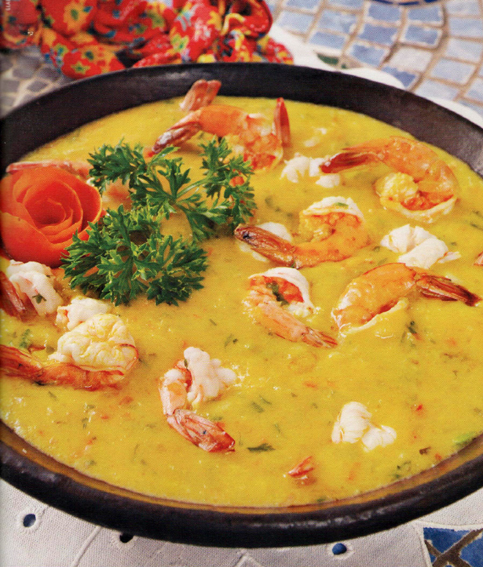
Showing posts with label shrimp. Show all posts

Sunday, January 6, 2013

RECIPE - Shrimp in a Pumpkin (Camarão na Moranga)

(First off, a note for students who are just beginning to study Portuguese. This is not a recipe for shimp in a strawberry! The word for strawberry is morango, and this recipe is for shrimp in a moranga - with a final "a". Moranga is a word that means pumpkin, or at least one of those winter squashes that can be used like a pumpkin). Even native Portuguese speakers get these two words mixed up sometimes, and the Brazilian version of Internet sites like Ask Yahoo are full of questions asking basically "Are morango and moranga the same thing?" To avoid confusion, we'll skip the Portuguese terms in this post and just refer to the vegetable in question as a pumpkin.)


A stand-out centerpiece for a fancy dinner table, or a buffet, Shrimp in a Pumpkin is a familiar showpiece for Brazilian dinner parties, Christmas and New Year's feasts, birthdays, and anniversaries. Undeniably spectacular, it's also undeniably delicious, and for many Brazilians, it's their favorite way to eat shrimp. It's also undoubtedly one of the best ways to serve shrimp to a crowd.

You can use any large winter squash for this dish, though a bright orange pumpkin makes a visually appealing presentation. In contemporary Brazilian restaurants, the dish is even popping up in individual servings, using the small mini-pumpkins that arrive in supermarkets in the holiday season. One of those, filled with shrimp and sauce is just perfect for one person. The traditional version, however, employs a large pumpkin to serve the entire party.
__________________________________________________
RECIPE - Shrimp in a Pumpkin (Camarão na Moranga)
Serves 6

a 6 lb (3 kg) pumpkin or other squash
2 lbs (1 kg) medium shrimp, cleaned, peeled and deveined
2 limes
2 tsp salt
1 small serrano or jalapeno chile (optional), halved and seeded
3 bay leaves
2 cups shrimp stock (recipe here)
2 medium onions, chopped
2 Tbsp butter
2 Tbsp extra-virgin olive oil
5 medium tomatoes, peeled, seeded and chopped
3 cups cream cheese
2 Tbsp all-purpose flour
2 Tbsp good-quality curry powder
2 tsp Tabasco sauce (optional)
3 Tbsp extra-virgin olive oil
3 Tbsp neutral vegetable oil
4 Tbsp finely-chopped Italian parsley
-----------------------------------------------------------------------------
Cut a circular opening in the top of the pumpkin (as you would for a jack-o-lantern). Using a spoon and your hands, remove all the seeds and strings from inside the pumpkin. Wash the pumpkin thoroughly inside and out, then dry the inside with paper towel. Reserve.

Preheat the oven to 205C (400F).

Put the shrimp in a large mixing bowl, then add the fresh-squeezed juice of two limes, the salt, the halved chile and the bay leaves. Mix thoroughly and refrigerate for about one hour (while the pumpkin roasts).

Wrap the pumpkin in aluminum foil, place a large baking pan, and roast in the oven for about 50 minutes. Remove from the oven and reserve, keeping warm. No not turn off the oven.

In a large saucepan, heat 2 Tbsp each of butter and olive oil, then saute the chopped onions for a few minutes, or until the onions are transparent but not browned. Add the tomatoes and cook, stirring frequently, for a few minutes, or until the tomato begins to break down. Add the cream cheese, and combine thoroughly, making sure that the cheese has melted and combined with the other ingredients. Reserve, keeping warm.

In a mixing bowl containing the shrimp stock, whisk in the flour and continue to whisk until their are no lumps. Mix in the curry powder and optional Tabasco sauce. Stir this mixture into the cream cheese/tomato sauce, and reserve, keeping warm.

In a large frying pan, heat 3 Tbsp each of olive oil and neutral vegetable oil. Remove the shrimp from the refrigerator and saute (in two batches if necessary to avoid overcrowding). Cook for a few minutes only, stirring constantly but gently, until all the shrimp have become opaque and turned pink. Do not overcook. Stir the shrimp gently in the the sauce mixture.

Open the top of the pumpkin (leaving the rest of it still covered with aluminum foil. Reserve the top. Pour the shrimp mixture into the pumpkin, filling it completely if possible. Return the filled pumpkin to the hot oven and cook for 10 minutes. Remove from the oven, remove the aluminum foil, then place the pumpkin on a large serving platter. Sprinkle the surface of the shrimp mixture with chopped parsley. Serve on a buffet table or at the center of a dining table, with a large ladle for serving the shrimp from inside the pumpkin, along with a bit of the cooked pumpkin.

Thursday, June 21, 2012

RECIPE - Shrimp and Rice, Espirito Santo Style (Arroz com Camarão Capixaba)

This wonderfully flavorful dish of rice and shrimp - halfway between risotto and paella - comes from the coastal state of Espírito Santo and is a perfect examply of how Brazilian cooks make use of clay cooking pots, something we've been featuring recently on this blog.

Espírito Santo lies along Brazil's southeastern coastline, bordered on the south by Rio de Janeiro state and on the north by Bahia. The coast has miles and miles of wonderful beaches, backed by the same spectacularly beautiful granite domes and mountains that famously frame Rio de Janeiro's landscape. Because of the long coastline, Espírito Santo's gastronomy is dominated by fish and seafood and the state is famous for its unique way of making fish and seafood moquecas - highly seasoned stews. Espírito Santo and Bahia are both famous for moquecas, but each has its own tradition. Bahian moquecas use coconut milk seasoned with dendê oil to provide the base for the stew; in Espírito Santo the broth is based on coconut milk, tomatoes and onions.

Espírito Santo's coastal cuisine isn't all about moquecas though - equally loved are rich and hearty main course dishes combining rice and any number of varieties of seafood. In Portuguese these dishes are rather prosaically called simply "rice and...". For example, rice and shrimp or rice and mixed seafood. In English they'd more likely be called risotto or paella, though technically they are neither. The rice used in regular long grain, so they really aren't risottos, which require Italian short grain rice. And they aren't really paellas either as they lack the essential saffron color and flavor and never mix seafood with chicken or sausages.

What does make these rice dishes special is that they are always cooked in clay pots. In Espírito Santo there is even a particular locally-based type of clay cookware known as Goiaberas, manufactured artisanally in Vítoria, the capital of the state. (Click here to read more about this type of cookware). The pots from Goiaberas are of a perfect shape and form to make this recipe, though it can easily be made in any type of pot or pan that you normally use for stovetop cooking. The resulting dish might not have the charm and Brazilian-ness that cooking in Goiaberas wear does, but those two whom you serve it will not complain, guaranteed. It's a wonderful dish for a casual supper with guests - informal, beautiful and tasty.
__________________________________________________
RECIPE - Shrimp and Rice, Espirito Santo Style (Arroz com Camarão  Capixaba)
Serves 4

4 Tbsp extra-virgin olive oil
1 Tbsp annatto, ground or paste (can substitute sweet paprika)
4 cloves garlic, crushed
9 medium tomatoes, cut into small cubes
2 medium onions, chopped, not too finely
1/2 cup finely chopped cilantro
salt to taste
2 lbs (1 kg) medium shrimp, peeled and deveined
1/2 cup coconut milk
1/2 cup fresh or frozen peas
1/2 cup fresh or frozen corn kernels
1/3 cup green or black olives, pitted and coarsely chopped
6 cups cooked long grain white rice
2 stalks hearts of palm, halved horizontally (optional)
1/2 small tomato, cut into four wedges
grated parmesan to taste
-----------------------------------------------------------------------------
In a large, low clay pot (or other pot or pan, like a large skillet or saucepan) heat the oil, then add the annatto or paprike and crushed garlic. Cook for a minute or two then add the chopped tomatoes, the onions, the cilantro and salt to taste. Cook for a few minutes, or until the tomato begins to break up. Add the shrimps, the coconut milk, the peas and corn and half of the olives and mix thorough. Lower the heat, cover the pot or pan and cook for ten minutes.

Uncover the pot or pan, stir in the cooked rice and continue cooking, stirring regularly, until the rice is heated through and has absorbed the liquid.

Serve at table in the cooking dish or other decorative serving dish. Garnish the surface with the tomato wedges, the palm hearts and the other half of the olives. Serve with grated parmesan on the side.

Sunday, May 20, 2012

RECIPE - Fish and Shrimp Ceviche with Starfruit (Ceviche de Peixe e camarão com carambola)

In Friday's post on carambola, aka starfruit, we mentioned that relegating that beautiful and delicious fruit to being nothing more than a mere garnish on a plate or glass is a culinary crime of the first order. Brazilian chefs are using the fruit more and more these days not just tart up a dramatic plate, but as an integral part of the flavor profile for a dish.

This recipe, which is one of the more inventive results with the current Brazilian craze for Peruvian cuisine, is a variation on the traditional Andean technique of marinading raw fish or seafood in lime juice to "cook" it. Ceviche has taken off in a big way in Brazil in the past few years and now shows up on menus in bars, botecos and five-star restaurants. This recipe comes from Brazilian food and wine magazine, Gula, and was created by chef Carol Caldas of Rio de Janeiro's Santa Satisfação restaurant.

Starfruits are commonly available in North American and European supermarkets, year round, so this recipe is easy to make at home almost anywhere. It makes a delicious first course, or main course for a light lunch.
__________________________________________________
RECIPE - Fish and Shrimp Ceviche with Starfruit (Ceviche de Peixe e camarão com carambola)
Serves 2-4 (main course or first course)

1/2 lb. firm white-fleshed fish fillet
1/4 lb. raw peeled small or medium shrimp
1/2 small red onion, minced
1 small tomato, peeled, seeded and cubed
juice of 2 large limes
salt and pepper to taste
2 firm small starfruits (carambolas), sliced
2 Tbsp. finely chopped fresh cilantro, leaves only
---------------------------------------------------------------------------
Cut the fish into small cubes, and halve the shrimps if large. Combine them in a medium mixing bowl, season with salt and pepper and mix in the lime juice. Let marinade, refrigerated, for half an hour. In a separate bowl, chill the sliced starfruit.

Remove the marinaded fish from the refrigerator, mix in the starfruit and cilantro and serve immediately, very cold.

Friday, January 27, 2012

RECIPE - Shrimp São Paulo Style (Camarão à Paulista)

Although São Paulo is not a maritime city, its situation on a 2500 ft (760 m) high plateau is only 50 miles (72 km) inland from Santos, Brazil and South America's largest port. The Atlantic coast of São Paulo state is lined with beach resorts and Santos has a significant commercial fishing industry.

Because of the maritime links between metropolis and port, seafood is an important part of São Paulo's diet, and many fish and shellfish dishes have pride of place in São Paulo's gastronomy. This recipe, which is part of Flavors of Brazil's week-long celebration of São Paulo's 458th birthday, is a favorite appetizer or first course in simple, neighborhood bars and restaurants. It's so closely connected with the city that it is known as São Paulo style shrimp.

The recipe itself is very easy and quick. The only important thing to note is that it requires best-quality shrimp, as fresh as possible. As the shrimp are fried in their shells and seasoned only with garlic, parsley and lime, the briny flavors of the crustacean itself predominate in the dish. If you prefer, you can cut the shells open along the back of the shrimp to remove the vein. But don't remove the shell (nor the head) - if you do it won't be Camarão à Paulista.

Serve very hot with a large bowl for the shells and finger bowls with warm water. You'll need them.
_______________________________________________
RECIPE - Shrimp São Paulo Style (Camarão à Paulista)
Serves 4

2 lbs (1 kg) large whole shrimp - with heads and unpeeled
salt and pepper to taste
1/2 cup fresh-squeezed lime juice
1/3 cup neutral vegetable oil
6 cloves garlic, peeled and thinly sliced
1/2 cup finely chopped parsley
2 limes, washed and cut into wedges
---------------------------------------------------------------------
In a large mixing bowl combine the shrimps, salt and pepper to taste and the lime juice. Toss the shrimps to cover with juice and let marinate in the refrigerator for one hour.

Drain the shrimp and pat dry. Reserve.

In a large heavy-duty frying pan heat the vegetable oil until it's very hot but not smoking. Add the shrimp and fry, stirring from time to time, until the shrimp have turned pink and are cooked through, about three minutes. Remove the shrimp with a slotted spoon, and drain them on paper towels, keeping warm.

Meanwhile, add the sliced garlic to the oil the shrimp was fried in. Fry until the slices just turn light brown. Do not overcook. Remove the garlic with a slotted spoon and drain on paper towels.

Put the shrimp in a large deep serving bowl. Sprinkle the sliced garlic over all, then sprinkle with the chopped parsley. Add the lime wedges around the edges of the bowl and serve immediately.

Recipe translated and adapted from Cozinha Regional Brasileira by Abril Editora.

Tuesday, January 3, 2012

RECIPE - Shrimps Carlos Swann (Camarões a Carlos Swann)

Every now and then, Flavors of Brazil publishes a Brazilian recipe that is named in honor of someone - famous or otherwise. In the past, we've published recipes for a cake named after a noble family from the northeastern state of Pernambuco, a grilled steaked named after a famous Brazilian diplomat, and Brazil's favorite sweet, named for the rank of noted military officer Eduardo Gomes (his rank was brigadier, or brigadeiro in Portuguese).

This recipe for cream-cheese-stuffed shrimp, breaded and deep-fried, is named after a Rio de Janeiro newpaper columnist whose nom de plume was Carlos Swann. His real name is Carlos Leonam, but as he is known publically as Carlos Swann, it was under that name that he was honored by this recipe. For many years he penned a social and entertainment column for Rio's O Globo newspaper, and also has written for a number of other newspapers and magazines. His biography page on the Portuguese language Wikipedia site mentions the pseudonym Swann, but does not explain why it was chosen, or if there's a connection to Proust or not.

In the recipe, the breaded shrimp are served on top of white rice cooked with raisins. The recipe calls for Brazil's favorite brand of cream cheese, Catupiry. However, any other brand of cream cheese may be substituted.
__________________________________________________
RECIPE - Shrimps Carlos Swann (Camarões a Carlos Swann)
Serves 2

For the shrimp:
6 jumbo shrimp, peeled with tails left on, deveined and cooked
3 whole eggs
salt to taste
1 1/4 cup all-purpose flour
1 cup cream cheese
2 cups neutral vegetable oil (for frying)

For the rice with raisins:
2 Tbsp neutral vegetable oil
1 cup seedless raisins
2 cups cooked white rice, cold
-------------------------------------------------------------------------

Make a shallow cut lengthwise along the back of each of the shrimp, allowing the shrimp to open slightly. Do not cut all the way through the flesh. Reserve.

In one shallow soup plate beat the three eggs, and add salt to taste. In another, spread out the flour.

Using a table knife, stuff each shrimp with one Tbsp or more of cream cheese. Press the two half of the shrimp together to seal. Pass each shrimp first into the beaten eggs, then into the flour. Repeat the process with each shrimp - one more time in the eggs, then the flour. Reserve.

Heat the oil until very hot but not smoking. Deep-fry the shrimp, in two batches if necessary. Cook until the shrimps are cooked through and the breading is golden-brown. Reserve, keeping warm.

In a frying pan, heat the 2 Tbsp vegetable oil, then add the raisins. Cook for a minute or so, then add the rice. Stir-fry the rice until it's hot and the grains are all lightly coated with oil. Add salt to taste.

Spread the rice on a decorative serving platter, top with the shrimps. Garnish with rings of red pepper and serve with wedges or slices of lemon or lime.

Recipe translated and adapted from Cozinha Regional Brasileira by Abril Editora.


Monday, December 19, 2011

RECIPE - Spaghetti with Zucchini and Shrimp (Espaguete com abobrinha e camarão)

Today, we decided to post the following recipe from the Brazilian women's website Mdemulher for two reasons. First, because yesterday's post concerned one of the main ingredients, abobrinha (zucchini in English - or should we say Italian?). And the second is that in this season of major feasts and parties, there are always one or two nights where there's no event planned. Nights when, in fact, you couldn't abide another massive buffet or a roast the size of a small village. For those nights, this light, simple and utterly delicious recipe for pasta with a shrimp-and-zucchini sauce is perfect.
______________________________________________________
RECIPE - Spaghetti with Zucchini and Shrimp (Espaguete com abobrinha e camarão) 
Serves 6

1 medium zucchini (or two small ones)
1 1/2 lb (750 gr) medium shrimp, shelled and cleaned
juice of one lime
2 cans tomato sauce
1 cup (250 ml) whole milk
4 Tbsp extra-virgin olive oil
1 Tbsp finely-chopped garlic
1/2 cup (100 gr) freshly grated parmesan cheese
2 Tsp butter
1 lb (500 gr) spaghetti or other long pasta of your choice
1 pinch sugar
salt and pepper to taste
------------------------------------------------------------------------------
Wash the zucchini thoroughly but do not peel it. Cut the zucchini into julienne strips (most easily done with a mandoline). Reserve. Rinse the shrimp in cold fresh water, drain, put into a bowl and sprinkle with the lime juice, tossing gently to mix in the juice. Reserve.

In a medium saucepan, heat two Tbsp of the olive oil, fry half of the chopped garlic in it until softened but not browned. Add the tomato sauce, milk, parmesan cheese, butter, pinch of sugar and season with salt and pepper to taste. Bring to a boil, reduce heat and let simmer for a few minutes, then remove from heat. Cover the saucepan and reserve.

In a frying pan, heat the remaining two Tbsp of olive oil. Add the remaining garlic, fry for a minute or so, then add the julienned zucchini. Continue cooking just until the zucchini is al dente. Remove from heat, put the zucchini in a bowl, and reserve. Reserve the frying pan for cooking the shrimp later.

 Meanwhile, cook the spaghetti according to package directions.

Just before the spaghetti id some, reheat the frying pan gently, add a touch more oil if necessary, add the shrimp and toss for a few minutes or until the just turn opaque and pink. Do not overcook.

Using a large decorative serving bowl, place the cooked and drained spaghetti in the bottom of the bowl. Pour the tomato sauce over, sprinkle the zucchini on top, then finish with the shrimp. Grind a bit of black pepper on top, if desired and serve immediately.


Thursday, December 8, 2011

Farmed Shrimp Gain "Green Seal" and Organic Certification

Organic farmed shrimp
Farming shrimp is big business in Flavor of Brazil's home state of Ceará, on Brazil's northeast coast, and the industry is growing by leaps and bounds as consumers' appetites for the tasty crustacean outpaces the ability of the sea to provide a sustainable shrimp fishery. The industry dates back only about fifteen to twenty years, but in each recent year its growth has been in double-digit figures.

Unfortunately not all shrimp cultivators consider the environmental impact of their shrimp farm operations, and the local industry has not always enjoyed a good reputation among environmentally-aware consumers. Although it's entirely possible to cultivate shrimp in an environmentally-friendly and sustainable way many local producers either don't know what's required to make their production sustainable, or don't want to spend the extra money to ensure that their facilities don't negatively impact the environment.

Up to now, consumers who want to support those producers who go to the effort and expense to spare the environment haven't had access to information to know which shrimps on display at markets and supermarkets come from sustainable operations. In order to provide this information and to promote the practice of sustainable shrimp cultivation, the Ceará state Ministry of Agriculture and Fisheries recently announced a program to market sustainably-raised shrimp with a "Green Seal", a stamp of approval indicating to the consumer that shrimp with a seal meets the environmental criteria of sustainability. The Green Seal was chosen because of the previous success of a similar program involving crab harvesting, where sustainable crab fisheries gained a Green Seal for their product. The crab project was detailed last on Flavors of Brazil and this link will take you to the article.
Shrimp farms on the Costa Negra

The government launched the Green Seal program in November of this year at a presentation and luncheon in the city of Acaraú, located on the part of the Ceará coast called the Costa Negra (the Black Coast), where there are large shrimp-cultivation installations. Those producers who meet the standards set out in the establishing regulations will be entitled to market their shrimp with a Green Seal attached, indicating to consumers that they can buy the product without worrying about the environmental impact of the purchase.

In a further evolution of the consumer market for environmentally-friendly shrimp, one Ceará producer, Nutrimar, has gone one step further and has had their production certified as organic. Nutrimar's shrimps are feed exclusively on marine algae and receive no commercial fish feed, which can have significant levels of agritoxins. Their frozen organic shrimp are marketed both domestically and internationally, and have been recognized and approved by the German-based NGO Naturland, whose standards are among the strictest in the world.

Thursday, September 8, 2011

RECIPE - Shrimp Bobo (Bobó de Camarão)

This classic dish from the state of Bahia is one of the cornerstones of the Afro-Bahian tradition of cooking that is so strongly linked to the state and to its capital, Salvador. It contains most of the fundamental ingredients in the Bahian cook's larder - manioc, coconut milk (lots of it!), dendê palm oil and the sweet fresh shrimps for which Brazil's north-east coast is so famous.

A bobó is a manioc cream or puree, which can be served unadorned or finished with shrimp or other protein.  Depending on the recipe and on the cook the puree can be as thin as a soup or something more substantial. The word bobó comes to Brazil from the language of the Ewe people who inhabited current-day Ghana, Togo and Benin and who were brought to Brazil as slaves in large numbers during the era of the trans-Atlantic slave trade. In their language, bobó means "a dish made with beans." Today, there are no beans in bobó, at least in Brazil. Instead the cream is made with manioc, a native South American staple and one to which Afro-Brazilian slaves took enthusiastically when they were introduced to it in the New World.

For anyone who has any culinary curiousity or interest in Brazilian cooking and eating traditions, going to Salvador or anywhere else in Bahia and not trying bobó de camarão at least once would be nearly as great a gastronomic sin as not trying acarajé while visiting Bahia. (Nearly as great, but not quite). Fortunately, bobó de camarão is easy to find in restaurants that feature local dishes and is a staple dish on buffet tables in Bahian self-serve restaurants. It's also quite easy to make, and can be a great centerpiece for a casual dinner for a small group.  This recipe serves 8 well. White rice is an obligatory side dish, and if you add a green salad you have a complete meal.

The only ingredient that can be difficult to source outside Brazil (and which is absolutely necessary in a bobó) is the shockingly-brilliant orange palm oil called dendê. In North America and Europe it can be ordered online, or usually can be sourced in Latin American and African food markets. If the product is destined to the African trade, it might just be labelled "palm oil" - if it's orange and solid or semi-solid at room temperature, then it the right stuff. Manioc is available in the same markets, though it may be labelled cassava root, or yuca depending on the ethnic variety of the market.
______________________________________________________
RECIPE - Shrimp Bobo (Bobó de Camarão)
Serves 8

For the manioc cream:
2 lbs (1 kg) cooking onions, peeled and chopped
2 lbs (1 kg) firm, ripe tomatoes, seeded and chopped
2 green bell peppers, seeded and chopped
4 Tbsp finely cilantro, finely chopped
2 lbs (1 kgs) manioc/cassava/yuca root, peeled, boiled and mashed
2 cups (500 ml) extra-virgin olive oil
4 cups (1 liter) coconut milk

For the shrimp:
4 lbs (4 kgs) medium or large shrimp, peeled, deheaded and deveined, with tails left on
1 clove garlic, minced
1 Tbsp salt
2 Tbsp cilantro, finely chopped
3 medium tomatoes, seeded and chopped
3 medium onions, chopped
1 green bell pepper, seeded and chopped
1/2 cup (125 ml) extra-virgin olive oil
4 cups (1 liter)coconut milk
2 Tbsp dendê oil
-------------------------------------------------------------------
 Prepare the manioc cream:  In a large heavy saucepan, combine the onion, tomatoes, green pepper and cilantro with the mashed manioc. Stir in the olive oil and coconut milk, then heat over medium-high heat, stirring constantly. Cook for 10 minutes, stirring constantly, or until the cream begins to pull away from the bottom of the pan when you stir. Remove from the heat and reserve.

Prepare the shrimp: Rinse the shrimp well in plenty of cold running water. Drain. In a large, deep saucepan combine the drained shrimp, chopped garlic, salt, cilantro, tomatoes, onions, green pepper and the olive oil. Heat over medium high heat, stirring frequently. When hot, add the coconut milk in 1/2 cup amounts, stirring after each addition to completely mix. Continue to cook for 5 minutes more, stirring constantly.

Add the reserved manioc puree to the shrimps and continue to cook for 5 more minutes, stirring frequently. Just before removing from the heat, add the dendê oil and mix it in completely. Remove from heat, pour into a decorative deep serving platter, sprinkle with additional cilantro if desired and serve immediately.

Thursday, August 25, 2011

RECIPE - Shrimp with Chayote (Camarão com Chuchu)

Here in Brazil's north-east shrimp is so good and served so many different ways that it's difficult not to eat it every night of the week. It's also relatively inexpensive, especially by North American or European standards, so it's not out of the question here to buy the more-expensive sea-caught shrimps instead of the cultivated ones, even if most of those are sustainably farmed. The difference in taste is worth every centavo of the difference in price.

This easy recipe from the north-eastern state of Rio Grande do Norte was last night's dinner for us here at Flavors of Brazil and comes from a series of books on regional Brazilian cuisine called Cozinha Regional Brazileira, published by Abril Editora. It combined medium-sized shrimp with the mild-tasting but delectable vegetable known in Spanish as chayote, in English as christophene or vegetable pear, and in Cajun French as mirliton. Here is Brazil it bears the charming name chuchu (pronounced shoo-shoo). Until recently difficult to source in most of North America, chayote has recently moved beyond Latin American ethnic food shops and markets and can now be found in supermarkets everywhere. If you've never tried chayote, this recipe is a perfect introduction, as it's quick, no-fuss and absolutely delicious.
______________________________________________________
RECIPE - Shrimp with Chayote (Camarão com Chuchu)
4 portions

1 lb (400 gr) medium shrimp, headless, deveined and peeled
juice of 1 lime
salt and black pepper to taste
1 Tbsp cilantro, finely chopped
1 small onion, finely chopped
1 clove garlic, finely chopped
2 Tbsp extra-virgin olive oil
2 medium tomatoes, peeled, seeded and chopped
1 lb chayote, peeled, depitted and cut into small cubes
1 small chili pepper (malagueta, jalapeno, serrano), halved and deseeded
1 tsp Italian parsley, finely chopped
---------------------------------------------------------------------------
In a medium mixing bowl, season the shrimp with the lime juice, salt and pepper to taste and the chopped cilantro. Allow to stand for 15 minutes.

In a medium pan, heat the olive oil over medium heat, add the chopped onion and garlic and saute until the onion just begins to brown. Add the reserved shrimp and cook for a few minutes, stirring, until the shrimp begin to take on a pink color. Add the chopped tomatoes, the chayote cubes and the halved chili pepper. Correct the seasoning for salt, cook for a few minutes over medium heat or until the tomato begins to break up. Reduce heat to low, cover the pan and cook for about 25 minutes or until the chayote is soft and tender. Add additional water by 1/4 cup amounts if needed to prevent drying out.

Remove from heat, discard the chili pepper halves, add the chopped parsley and toss briefly. Place in a decorative serving bowl and serve immediately accompanied by white rice.

Saturday, August 20, 2011

RECIPE - Seafood Stew Antonio Houaiss (Peixada à Antônio Houaiss)

Antônio Houaiss, member of the Brazilian Academy of Letters, was a twentieth-century lexicographer, author and publisher in Rio de Janeiro. His most enduring monument is the Portuguese-language dictionary that he edited from 1985 to 1999 and published posthumously in 2001 entitled Dicionário Houaiss da Língua Portuguesa, usually just referred to in Brazil as the Houaiss.

But the dictionary is not Sr. Houaiss' only memorial. As discussed in yesterday's post on Flavors of Brazil noted persons in Brazil and elsewhere are often memorialized by dishes created in their honor, and in Brazil a rich and luxurious seafood stew has been given Sr. Houaiss' name.

Along with many other intellectuals and literary figures in Rio in the second half of the twentieth century, Antônio Houaiss often chose to dine at midday in a downtown restaurant called Rio Minho. There, his favorite dish was apparently a saffron-scented seafood stew containing fish, shrimps, the strange lobster-like crustacean called cavaquinha, and boiled potatoes. Eventually, he became so associated with the dish that the restaurant decided to add his name to the dish to honor his many literary achievements (and his gastronomic good taste).

Rio Minho restaurant, one of Rio's oldest restaurants, having opened in 1884, is still packed at lunchtime with authors, editors and literary agents, and it's still serving many of them Antônio Houaiss' favorite dish.

Since cavaquinha isn't easily found in fish markets outside Brazil, you can very successfully substitute lobster tail in this elegant (and quite expensive) dish.
_______________________________________________________
RECIPE - Seafood Stew Antonio Houaiss (Peixada à Antônio Houaiss)
Serves 2

6 small boiling potatoes (or 3 medium-large, halved), peeled
2 extra-large prawns, peeled but with tails left on
1 cavaquinha (or lobster tail)
1/4 cup neutral vegetable oil
6 cloves garlic, minced
1 cup dry white wine (original recipe calls for Chardonnay)
1 Tbsp saffron
1 grouper or halibut steak
2 Tbsp Italian parsley, finely chopped
--------------------------------------------------------------------------
Bring one quart (1 liter) salted water to the boil in a large saucepan. Add the peeled potatoes and cook until just tender. Remove the potatoes with a slotted spoon, refresh them in cold water and reserve. In the same water cook the shrimps and cavaquina or lobster for 5 minutes. Reserve the seafood.

In a small frying pan heat half of the vegetable oil, then add the minced garlic and saute for a minute or so. Do not let the garlic brown. Add the wine and the saffron. Bring to a boil, reduce the heat and simmer for two or three minutes, then remove from heat and reserve.

In a large frying pan, heat the remaining oil, then fry the fish steak until it is tender and just beginning to flake. Remove from the pan, drain on paper towel and reserve.

Place the fried fish in a small oven-proof gratin dish or deep serving dish. Place the lobster tail on top of the fish and one shrimp at each end of the lobster. Surround with the boiled potatoes, then pour the wine/saffron mixture over all. Place the dish under a pre-heated broiler for a few minutes, or until all the seafood is hot and the liquid is bubbling. Remove from the heat, sprinkle the potatoes with the parsley and serve immediate in the gratin or serving dish.

Thursday, August 18, 2011

RECIPE - Creole Salad (Salada Crioula)

The word creole has several definitions in English and its Portuguese equivalent crioulo has just as many. And the meanings can be contradictory - one of the English definitions is "a person born in the West Indies or Spanish America, but of European, usually Spanish, ancestry", while in the best-known Brazilian Portuguese dictionary, Houaiss, one of the definitions is "blacks (slaves, or descendents of slaves) born in Brazil." In both English and Portuguese, the word can also refer not to persons but to languages. The Oxford Concise Dictionary defines a creole language this way: "A mother tongue formed from the contact of a European language with a local language (especially African languages spoken by slaves in the West Indies."

All of which is to explain that the name for the recipe featured in this post, creole salad, really doesn't provide any useful information about the recipe - what it contains, where it comes from, how or when it's to be eaten. This is one of those recipes with a poetic name, one that is meant to be evocative and inviting. If creole salad were to have a descriptive title, it would probably be called shrimp and avocado salad. For that's what it is - a combination of avocado, coconut milk, cilantro and boiled shrimps.

Whether the name is prosaic or poetic, however, this dish is simple, quick and delicious. It makes a great first course at dinner, or a lunchtime main course. When shopping for ingredients be sure to get good-sized shrimp or increase the number if only small shrimp are available. In Brazil, this recipe would be made with a large, bright-green avocado and half an avocado is sufficient for one person. If only the very small, black and knobby Hass avocados are available to you then a whole one per person is better.
________________________________________________________
RECIPE - Creole Salad (Salada Crioula)
Serves 2

6 medium shrimp, peeled but with tails attached
4 sprigs fresh cilantro, chopped
2 Tbsp coconut milk
2 Tbsp olive oil
1 small jalapeno or serrano chile, seeded and finely chopped (optional)
juice of one medium lime
1 or 2 ripe (but not over-ripe) avocados (see note above)
salt and pepper to taste
------------------------------------------------------------------------------
Cut the avocado(s) in half lengthwise and remove the pit. Using a spoon remove the flesh from the skin, taking care not to tear the skin. Reserve the shells.

Put the avocado flesh in a small mixing bowl, the mix in the coconut milk, the olive oil, and the lime juice. With a spoon mash and mix all the ingredients, but don't overmix. You want some texture remaining at the end of the process, not a homogenous pulp. Season with salt and pepper to taste and reserve.

Bring salted water to a boil in a medium saucepan. Add the shrimps and cook until just pink and opaque, about three minutes. Drain into a sieve or colander and refresh in cold water to stop the cooking process. Reserve.

Divide the mashed avocado among the shells, then top with the shrimp, dividing them among the shells as well. Sprinkle with the chopped cilantro and if desired with the chopped hot chili pepper. Serve immediately.

Recipe translated and adapted from recipe by chef Jeff Colas of Maison do Bonfim restaurant in Olinda, Brazil, as published in Prazeres da Mesa magazine. 

Wednesday, July 27, 2011

RECIPE - Vinegared Shrimp Cocktail (Camarão ao Vinagrete)

If you look at the Portuguese translation for this dish shown in the title above you'll see the word vinagrete. Yet we here at Flavors of Brazil have chosen to render the name of this dish into English as Vinegared Shrimp Cocktail. Since most English-speaking readers of this blog already know the word vinaigrette, with its French spelling, why didn't we simply call this Shrimp Vinaigrette?

The reason is that the English word vinaigrette and the it's Portuguese look-alike vinaigrete are what linguists like to call "false friends". That is, two words in different languages that look like they mean the same thing, but in fact don't. Their similarity can cause someone to use one to translate the other, but the translation isn't a good one. This can cause confusion, misunderstanding, or even dangerous consequences.

English-language vinaigrette comes from the French, as does its recipe. It's basically an emulsion of vinegar and oil, bound together by beating or whipping, and most commonly served as a salad dressing. Brazilian vinegrete (pronounced vih-neh-GRE-che) on the other hand is a condiment served at the table to accompany traditional rice, beans and meat Brazilian meals. It is made of chopped tomato, onion and sometimes green pepper in diluted vinegar. More of a relish than a salad dressing, and it has no oil.

This recipe from the north-eastern Brazilian state of Paraíba works beautifully as a first course for a dinner or a main course for a light lunch and consists of cold boiled shrimp tossed at the last minute with vinaigrete. Refreshing and light, it's a perfect food for a hot day at the beach, or for that matter in the city or at the lake.
_________________________________________________
RECIPE - Vinegared Shrimp Cocktail (Camarão ao Vinagrete)
Serves 2

For the shrimp:
1 1/2 lb (600 gr) large peeled shrimp, raw
juice of one large lime
salt to taste
lime slices to garnish

For the vinaigrete:
1 small red onion, finely chopped
2 medium tomatoes, seeded and chopped (do not peel)
1 small green or red bell pepper, seeded and chopped
1 Tbsp finely chopped cilantro
1 Tbsp finely chopped green onions, green part only
2 Tbsp white wine vinegar
1/2 cup water
------------------------------------------------------------------
Make the shrimp:
In a mixing bowl sprinkle the lime juice over the shrimp, then season with salt to taste. Let stand for 10 minutes. Meanwhile bring 6 cups (1.5 liters) water to the boil in a large saucepan. Add the shrimps to the boiling water and cook for 3-4 minutes, or just until the shrimp are pink, opaque and tender. Drain immediately in a sieve or colander and refresh with plenty of cold water. Drain thoroughly, place in a covered bowl and refrigerate for at least one hour.

Make the vinaigrete:
Combine all the ingredients in a medium mixing bowl. Cover and refrigerate for at least thirty-minutes for the flavors to blend.

Serve:
Divide the shrimp between two deep plates. Pour half of the solid vinaigrete ingredients over each, then stir with a wooden spoon to spread evenly. Add about 2 Tbsp of the liquid from the vinaigrete to each plate, and top with lime slice or lime wedge to garnish. Serve immediately, while still cold.
Combine

Thursday, July 7, 2011

RECIPE - Spicy Shrimps on Rice (Arroz de Camarão Picante)

One of the best things about cooking with Brazilian shrimps (other than the fact that they're so tasty) is that they're a breeze to cook. At the fish market located on the beach in Fortaleza you can buy them any size you want, and whether you prefer them peeled or unpeeled, with heads or without, cultivated or from the sea is merely a matter of personal choice. To cook the shrimps is only a matter minutes, literally. To be specific, usually about three of them (minutes, that is).

If you're as much of a fan of hot, spicy dishes as you are of shrimp, then this is a recipe for you. The heat of the dish can be adjusted by modifying the quantity of hot sauce, and if there are fire-eaters at your table you can serve the same hot sauce at the table for those who want to increase the Scoville-unit count of the dish. This dish can be genteely spiced, or it can be kickass hot - it's good either way. Just remember that you can always increase the heat level at the table, but you can't reduce it!
_______________________________________________
RECIPE - Spicy Shrimps on Rice (Arroz de Camarão Picante)
Serves 4

1 1/2 lbs (750 gr) small shrimps, peeled
bottled hot sauce to taste, any brand
juice of one lime
grated peel of one lime
1 Tbsp soy sauce
3 cloves garlic, minced
1 tsp light brown sugar
1/4 cup coconut milk
1 Tbsp extra-virgin olive oil
1 medium onion, finely chopped
1/4 cup cilantro, finely chopped and loosely packed
-----------------------------------------------------------------------
In a medium mixing bowl combine all the ingredients with the exception of the onion and cilantro. Let marinade at room temperature for 30 minutes.

In a large frying pan heat the olive oil over medium heat. Add the chopped onion and cook until the onion is just transparent. Stir in the shrimps and all the marinade ingredients. Increase heat to bring to a rapid boil - then reduce heat and cook for about three minutes, or until the shrimps are just cooked through.

Remove from the heat and put into a serving bowl. Stir in the cilantro, then serve immediately, accompanied with white rice. Place a bottle of the hot sauce used in the recipe on the table for those who wish a spicier dish.

Thursday, June 2, 2011

RECIPE - Ragout of River Prawns with Okra (Guisadinho de Camarão Regional com Quibo)

This recipe which comes from the state of Pará, where the entire Amazonian river system empties its waters into the Atlantic Ocean, calls for the small fresh water prawns called camarão regional, or in English Amazonian river prawns. (Click here for more information about this prawn.) Since there is currently no export market for the camarão regional, it's extremely unlikely that you are likely to find some at your local supermarket or fishmongers. However, any small, peeled, uncooked shrimp will work just fine in this recipe.

Besides the prawns, the other main ingredient of this dish is okra (quiabo in Portuguese). Originally from Africa, this delicious vegetable was brought to Brazil during the days of the slave trade, and is today eaten everywhere in Brazil. Many people have an aversion to okra, based on the misconception that it is invariably slimy or full of mucous. Okra does have the tendancy to become slimy when overcooked, but when cooked al dente, just to the point of tenderness, it is not slimy at all. To avoid the whole problem, this recipe leaves the cooking of the okra to the last minute, for combination with the rest of the dish just before serving.

Note: the recipe calls for a small quantity of a fresh herb known locally in  Pará as chicória-do-Pará. Confusingly, the name in English for this herb is culantro (NOT cilantro). It is common in Caribbean, Mexican, South American and Southeast Asian recipes, and can sometimes be found in food markets catering to those communities. If unavailable, it can be left out without seriously altering the taste of the dish.
__________________________________________________
RECIPE - Ragout of River Prawns with Okra (Guisadinho de Camarão Regional com Quibo)
Serves 4

For the shrimp ragout:
1 lb (450 gr) small, peeled shrimp, uncooked
2 limes
salt to taste
4 Tbsp extra-virgin olive oil
1 medium tomato, seeded and chopped

1 Tbsp fresh basil, finely chopped
1 Tbsp fresh culantro, finely chopped (see note above)
1 Tbsp fresh cilantro, finely chopped
1 Tbsp green onion, finely chopped
1 small serrano or jalapeno chile, seeded and finely chopped
5 cloves garlic, minced

For the okra:
12 medium-sized pods okra
1 small onion, diced
2 cloves garlic, minced
salt to taste
--------------------------------------------------------------------------
Prepare the shrimp: put the shrimp in a bowl, then squeeze one lime over. Stir briefly, then rinse the shrimp in a colandar with lots of fresh water. Return the shrimp to the bowl, and marinade them with the juice of the remaining lime, salt and one Tbsp of the olive oil. Let stand for fifteen minutes. In a large frying pan or casserole, heat half of the remaining olive oil, add the shrimp, the tomato, the basil, culantro, cilantro, green onion, chile and garlic and stir-fry for just a few minutes, until the shrimp is cooked through. Season with salt and reserve, keeping warm.

Prepare the okra: Cut off and discard the tops and tips of the okra pods. Cut the okra into rounds about 1/2 inch (1 cm) thick. In a small pan, heat the remaining olive oil, then briefly cook the onion and garlic. Add the okra and salt to taste, and stir-fry for a few minutes, until the okra is cooked but still al dente. Remove from the heat, and using a slotted spoon, remove the okra from the pan, letting each spoonful drain completely to eliminate any slime. Add the okra directly to the reserved shrimp, mix completely, then briefly heat the combined ragout. Serve immediately with white rice.

Wednesday, June 1, 2011

SEAFOODS OF BRAZIL - Amazonian River Prawn (Camarão Regional)

Amazonian river prawn
Amidst the bounty of strange and unusual fish and shellfish to be found in the stalls and boxes of the Ver-o-Peso Market in the Amazonian city of Belém, Brazil, are woven baskets of minute pink shrimp that come from the waters of the many backwaters of the Amazon River estuary. These small crustaceans are sold peeled or unpeeled; raw, cooked, dried or smoked; or still merrily swimming about in buckets.

They're known to the shoppers who wander the aisles of Ver-o-Peso as camarão regional, which would properly be regional shrimp in English. However, this little creature, with a scientific name (Machrobrachium amazonium) longer than it is, goes by the very accurate name Amazonian river prawn in our language.

Ribeirinho house
These shrimp live in the muddy waters of the thousands of small streams and rivers that feed into the main flow of the Amazon, In these calm waters, they are either caught in traps or farmed in large pens by those who live on the banks of the  river - people known as ribeirinhos. The ribeirinhos live a largely aquatic life, and depending on the rivers for water, food and transportation. The tides near the mouth of the Amazon are among the largest on Earth, with a daily variance of up to 12 feet (4 meters), and consequently the ribeirinhos dwell in small wooden houses on stilts, perched precariously above the high-water mark. Until recently self-sufficient in almost all things, they are only know entering into the economy, and trading in Amazonian river prawns in the only source of income for many of them.

A Brazilian social and educational NGO named Fase has been working with these riverside communities to develop a viable and sustainable shrimp fishery in the region. As the project leader explains in the introduction to the group's report on the project:

"In the estuary of the the Amazon River...the rural communities face a high degree of isolation. Travel from one community to another is only possible by boat or canoe, and travel from one community to another can take upwards of three hours. It is in this region, specifically in the municipality of  Gurupá, PA that the Ilha das Cinzas [site of the project] is located...A trip to the city of Gurupá itself takes 15 to 18 hours. The population of the entire municipality is twenty-six thousand (two thousand families), the majority of whom are ribeirinhos."

Thanks to Fase's project, over the six-year development period of the shrimp fishery among the ribeirinhos their average monthly income per family rose from R$128 (USD $80) to R$310 (USD $196). The fishery is now sustainable, and at least for the time being can meet the demand for Amazonian river prawns at the market of Ver-o-Peso, in the restaurants of Belém and other cities along the Amazon. Thanks to the efforts of some chef-advocates for Amazonian food, the little camarão regional is also beginning to show up in restaurants farther afield, in places like Rio de Janeiro, Porto Alegre, or Belo Horizonte. Either frozen or dried and smoked for transportion, the sweet flesh of these little shrimps is becoming valued throughout Brazil.

There's no export market currently for these shrimp, but with increased cultivation and proper conservation, there's no reason the camarão regional  couldn't move beyond Brazilian shores and become appreciated elsewhere in our increasinly connected world. That wouldn't be a bad thing, economically, for the ribeirinhos of the Amazon estuary. Nor for the gustatory experience of those who learn to appreciate their unique taste.

Wednesday, May 18, 2011

RECIPE - Cachaça Shrimp (Camarões com Cachaça)

This straightforward and delightful dish really can't claim to be Brazilian at all, even though it includes typical Brazilian ingredients like shrimp, cachaça and lime juice. It's a Flavors of Brazil adaptation of a recipe for tequila shrimp that we found on the internet (here) . That recipe, of course, was Mexican in inspiration even though it probably wasn't authentically Mexican. The recipe below can equally be called Brazilian-inspired, even if it's pedigree doesn't go back to colonial times here in Brazil.

We decided to substitute the tequila in the original recipe for cachaça for two reasons. The first was to see if it was possible to successfully "brazilianize" the original recipe by using Brazil's most iconic spirit instead of Mexico's. The second reason was purely monetary - tequila is extraordinarily expensive here in Brazil, and cachaça is relatively cheap. Tequila prices have climbed worldwide in the past few years, and there really is no such thing as cheap tequila anymore - anywhere. Additionally, here in Brazil there is a high duty charged on imported spirits. The result is that the cheapest tequila we could find when doing some casual research in local supermarkets and liquor stores was at least ten times the price of a decent cachaça.

Since we haven't tasted the original tequila-based recipe, we can't compare the two versions to say which is better. We can say, though, that the version with  cachaça was a huge success with everyone who tried it. If you have some cachaça at home, use it - you'll be happy with the results. If you have tequila only, go back to the roots of the recipe and use it instead of cachaça. It won't be Brazilian-inspired any longer, but a Mexican-inspired dish of shrimp isn't necessarily a bad thing.
__________________________________________________
RECIPE - Cachaça Shrimp (Camarões com Cachaça)
Serves 4

2 Tbsp. extra-virgin olive oil
1 medium onion, finely minced
3 garlic cloves, finely minced
salt to taste
1 1/2 lb (750 gr) uncooked shrimp, peeled, deveined and halved lengthwise
1/2 cup cachaça
1/4 cup (60 ml) freshly squeezed lime juice
chunks of fresh avocado
a few cilantro leaves
extra limes for serving
freshly ground black pepper
--------------------------------------------------------------------------
Heat the oil in a large heavy-duty frying pan. When the oil begins to shimmer, add the onion and garlic. Season with salt to taste, then cook for 5-8 minutes, or until the onion is translucent but not browned.

Add the shrimp and cook for about 3 minutes, or until they turn pink. Remove the pan from the heat, add the tequila and stir with a wooden spoon to loosen any brown bits from the surface of the pan. Return to the heat. Simmer until the alcohol has burned off and the shrimp are completely cooked, about 3 minutes.

Remove from the heat, add the lime juice, and mix thoroughly to incorporate.

Serve immediately on a bed of lettuce, topped with two or three chunks of fresh avocado and sprinkled with a few cilantro leaves. Garnish with a wedge of lime. Can be served as a first course or as a light main course at lunch. Offer hot chili pepper sauce for those who wish a spicy dish.

Tuesday, March 22, 2011

From the Rivers of the Rain Forest - Aviú

The Amazon, the world's largest river by all counts, is in fact not a river but instead a system of rivers. For most of its length, the main stream - one of literally thousands of rivers in the basin - isn't even called the Amazon in Portuguese, it's the Rio Solimões. Only when the Rio Solimões merges with the Rio Negro just below Manaus at the famous Meeting of the Waters is the name Amazon (Amazonas in Portuguese) applied to the river.

Some of the rivers that are tributaries of the main stream are among the greatest rivers on the planet in their own right. The Rio Negro, which flows into the Amazon from the north, is by volume the second largest river on Earth, superceded only by the Amazon itself. Its length exceeds 1500 miles. The longest tributary, the Tocantins, is more than 2250 miles long and it only enters the Amazon when that river has almost reached the sea.

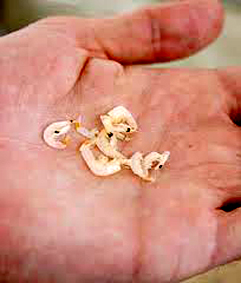
One of the major Amazon tributaries, called the Tapajós - a relatively small tributary at only 1200 miles long - is home to one of the most exotic and interesting ingredients in the Brazilian culinary larder. It's a freshwater micro-shrimp called aviú whose natural habitat is in the shallow quiet reaches of the Tapajós River. The miniscule aviú's size ranges from 1/2 inch (1 cm) to about 1 inch (2 cm) and it has long been a favorite food of local Indian tribes. When caught aviú may be eaten fresh or dried for storage and later consumption. One of the most common ways to eat aviú is in an omelet, and it can be added to rice to provide flavor and protein to that dish.

Clearly, aviú is an ingredient that can only be described as exotic - it's impossible to find outside its geographical boundaries, and the territory which in inhabits is near the South American pole of inaccessability - that is, the geographical point on the entire continent that most challenging to reach due to its remoteness and lack of accessibility.

Needless to say, here at Flavors of Brazil we haven't yet had the opportunity to taste aviú. Though it's on our to-be-tried list, I think it'll be quite some time before I make my way to the headwaters of the Tapajós in search of an elusive aviú omelet.

Tuesday, February 15, 2011

RECIPE - Xinxim de Galinha

One of the most iconic dishes of the Afro-Brazilian culinary tradition of the state of Bahia, xinxim de galinha not only satisfies the earthly appetite of those who eat it, but also honors the Orixá (goddess) Oxum in the religion that arrived in Bahia from its home in Africa along with the millions of slaves transported to Brazil during colonial times. It's highly likely that xinxim de galinha itself has African ancestors as well.

Xinxim de galinha is a relatively straightforward but marvelously delicious chicken stew - pieces of chicken are quickly browned, then cooked in a thick rich sauce until the chicken is tender. In xinxim, the sauce consists of ground dried shrimp and nuts combined with Bahia's ever-present, brilliant yellow palm oil, dendê.

Of the ingredients in the recipe, only dried shrimp and palm oil are not likely to be available in most any North American or European supermarket. In most metropolitan areas, these can be found, nonetheless, in Asian, African or Latin American markets that cater to immigrant communities. For dendê, look in African or Brazilian markets - in African markets it will be labelled "palm oil." It's bright orange color will identify it. Dried shrimp are used in many different cuisines, and should be obtainable in Chinese, Southeast Asian, Latin or African markets.

Xinxim is normally served with plain white rice, and some sort of hot chili-pepper sauce for those that prefer to add a bit of heat. A simple salad of a piece of lettuce topped by a few slices of tomato and onion is all the garnish that's required.
____________________________________________________
RECIPE - Xinxim de Galinha
serves 8

3 fresh limes
3 Tbsp. salt
4 lbs (2 kgs) cut-up pieces of chicken, skinned
3 large onions
2 cloves garlic
1/2 cup ground roasted cashews (can be ground in a food processor or spice grinder)
1/2 cup ground roasted peanuts (can be ground in a food processor or spice grinder)
1 cup peeled dried shrimp
1 cup loosely packed chopped cilantro
1 Tbsp. chopped parsley
2 Tbsp. finely grated fresh ginger
1 jalapeno pepper, seeded
2 cups water
1 Tbsp. extravirgin olive oil
1/2 cup dendê palm oil.
----------------------------------------------------------------------------
Squeeze the limes, to extract all their juice, but don't discard the skins. In a large bowl, combine the lime juice, 4 cups (1 liter) water, 1 tray ice cubes, the reserved lime skins, and 2 Tbsp salt. Add the chicken pieces and let stand for 15 minutes. Drain and dry the chicken pieces. Reserve.

In a blender or food processor combine the onions, the ground cashews and peanutes, the garlic, cilantro and parsley, the ginger, 1/2 cup of the shrimp and one cup of water. Process or blend until smooth.

In a deep, heavy pan, heat the olive oil over medium high heat, and brown the chicken pieces, a few at a time, making sure not to overcrown the pan, and adding additional oil as required.

Return the browned chicken to the pot, add the blended sauce ingredients, one more cup of water, and the other 1/2 cup of dried shrimp. Bring to a boil, then reduce the heat to low and cover the pan. Cook for about 20 - 30 minutes, stirring from time to time to make sure the sauce doesn't stick to the bottom of the pan and burn, or until the chicken pieces are tender. Add the dendê oil, heat for another minute or so, then remove from heat.

Serve immediately.

Monday, January 10, 2011

On the Road - Rio de Janeiro (Pt.5) - Lunching at the São Pedro Fish Market

In an eminently practical and gastronomically inventive move, the São Pedro Fish Market in Niterói, Brazil, just across the bay from Rio de Janeiro, built a mezzanine above the double row of stalls that house the fish market itself. This mezzanine, which looks down onto the hustle and bustle of the market is home to about 10 or 12 independent restaurant operations. Each has a space along one of the walls for a kitchen, and a few have separate air-conditioned dining rooms. Most, however, place their wooden tables and foldaway chairs out in the central space of the mezanine to make one great common dining room.

These restaurants specialize, of course, in seafood, and they do have menus from which one can order. The overwhelming majority of their customers, however, shop at the fish market before climbing the stairs to the mezzanine. At the market they choose the seafood they want to have for lunch (the market closes long before dinnertime) then carry it with them upstairs. It might be a pound of shrimp, or perhaps a cavaquinha. Then again, it might be a fillet or steak from a large fish like salmon or dourado, or a mess of whole sardines. Or even a whole fish, like snapper or mackerel, for grilling. Or if you're with a group, some of all of the above to share, family-style.

With their main course in hand, diners ascend the flight of stairs at either end of the market to the mezzanine. Any of the restaurants will cook one's purchase to order, and for the price of about R$10 (USD $6) will cook, garnish and plate whatever you bring them from downstairs. In addition, they can provide side dishes - fries, salads, beans, etc. - and lots of ice-cold beer, the drink of choice at São Pedro.

When we were at the market during Flavors of Brazil's recent visit to Rio de Janeiro, we purchased 1 lb (500 gr) of ocean-caught grew shrimps, whole and unpeeled, for R$17 (USD $10) and the same amount of dourado (dolphin-fish, mahi-mahi) for R$10 (USD $6). After checking out several of the restaurants on the mezzanine, we chose to hand our purchases over to one of the smaller restaurants called Parada Bonde ("The Tram Stop" in English). Our hard-working waitress, Graça, handled a huge number of tables and larger number of diners with efficiency and charm - she treated all of her customers with a Brazilian version of the truck-stop-waitress "tough love" that kept all of them in line and in love with her.

Our shrimps arrived first, fried just until crisp yet still juicy. We pulled off the heads, though many diners at adjacent tables ate the entire animal from head to tail. Tails were discarded too, but in the Brazilian fashion, we ate the body of the shrimp unpeeled and with legs attached, with a squeeze of lime. Accompanied by a 600 ml (20 oz) bottle of Antartica Original beer, the shrimp were salty from the sea, crunchy on the outside, and tender and flavorful on the inside. Absolutely delicious.

Just as we were finishing the shrimp, the dourado arrived, breaded and fried. It was served with more wedges of lime, plus raw onion rings. The firm, white flesh of the fish was cooked just right, and was very juicy. To my taste, the breading was too thick, but it was easily flaked away, and its thickness had prevented any oiliness from reaching the boneless fillet of fish. The fish, of course, required another bottle of Original to wash it down.

It all made a filling, protein- and iodine-rich seafood lunch. Nothing fancy, nothing expensive, just the freshest possible seafood purchased right off the crushed ice in the fish market, simply fried and served piping hot, with a super-cooled beer or two. And to top it off, the warmth and charm of Graça. Couldn't be better than that.

Wednesday, November 24, 2010

RECIPE - Grilled Seafood Salad with Parsley and Mint Pesto

This simple, elegant and light salad features a variety of grilled seafood dressed with a pesto made from fresh parsley and mint, drizzled with best-quality olive oil, and served with a wedge of lime. the recipe comes from Prazeres da Mesa, a Brazilian food and wine magazine, where it was suggested as an first course for a formal Christmas dinner. I think it would also make an excellent main-course salad at lunch, as it's rather substantial.

As originally published, the recipe calls for large shrimp, rings of squid cut from the tube, and rabalo (snook) fish. (Click here to read about rabalo on Flavors of Brazil.) Any firm-fleshed white fish, such as halibut, can be substituted as long as it isn't a fish that would flake if grilled. Although neither parsley nor mint are native to Brazil, both herbs are an essential part of Brazilian cooking traditions and are established as integral parts of the Brazilian flavoring spectrum.
____________________________________________________
RECIPE - Grilled Seafood Salad with Parsley and Mint Pesto
Serves 6

Pesto 
6 Tbsp extra-virgin olive oil
4 Tbsp freshly grated parmesan cheese
1/4 cup Brazil nuts, roasted but unsalted
1/2 cup finely chopped Italian parsley
1/2 cup finely chopped fresh mint

Seafood
12 large shrimp, headless, peeled but with tails left on, deveined
6 small squid tubes, cut into thick rings
1 lb (500 gr) robalo or other white fish fillets, cut into large pieces
3 Tbsp extra-virgin olive oil
juice of one large lime
salt and freshly-ground black pepper to taste
-----------------------------------------------------------------------------
To make the pesto - In a blender or food processor combine the olive oil, the parmesan cheese and the Brazil nuts. Process until you have a coarse, chunky mixture- do not overprocess. Add the herbs and process until you have a homogenous but not smooth mixture. Season to taste with salt and reserve.

To make the seafood - Season all the seafood with lime juice and salt and pepper to taste. In a non-stick frying pan or grill pan brushed with olive oil grill the shrimps for about 3 minutes per side. Reserve. Repeat the grilling operation with the squid, then the fish, reserving each.

Assembling the salad - Arrange the seafood nicely on plates, drizzle with a some pesto and a bit of olive oil. Serve, and pass the remaining pesto in a small bowl.